






Spirit Chrysler Dodge Jeep Ram

Blog / Car Repair Near Me

Get the Most From Your Car and Ensure It Has a Long Lifespan

A person is shown driving their car on a city street to a car repair appointment.

Cars are expensive. If you’ve been shopping for a vehicle lately, then you already know that—it might seem strange to hear that from a car dealership, but we’re not blind to reality. Your car is a big investment and represents a lot of time and money, so you should take good care of it and ensure it runs as well as possible for a long time. Some people will drive until a warning light comes on, ignore it for a month, then finally search “car repair near me” online to find a service center that can handle whatever the problem is. We’d suggest a more proactive approach.

The best way to get the most from your vehicle and keep it running for as long as possible is to take proper care of it. Don’t simply react when something goes wrong, but stay ahead of problems so they don’t come up in the first place—or fix them when they’re small. There are many things you can do to keep your vehicle running beautifully, so let’s go over a few of the simplest ones that every driver should keep in mind.

Follow Your Car’s Service/Maintenance Schedule

We’re starting with this because it’s probably the most important thing, and we really can’t stress it enough, though we’ll try. Your vehicle has a service or maintenance schedule provided by its manufacturer; you can typically find it in the owner’s manual, or it might be provided as a separate document. If you’ve lost the service schedule or otherwise cannot find it, we would be happy to help you figure out what it is. The point is this: whatever the service schedule for your vehicle is, follow it.

That guide was created by the people who designed, engineered, and built your car—they know how to care for it. Note both the time and mileage markers on the schedule, and be sure to follow whichever comes up first; if you drive a lot, you will need to have your vehicle serviced more often than someone who only leaves the house a few times a week. This schedule includes things like oil changes, fluid inspections, brake inspections, tire rotations and replacements, alignment checks, and much more. All of these things will keep your vehicle running great, making your daily drive more enjoyable and helping it stay in terrific shape for as long as possible.

Practice Good/Safe Driving Habits

It was a toss-up between this and the previous point for which one to start with, but the service schedule won out (barely). Nearly equally important, however, is that you practice good habits when you’re behind the wheel. This includes things like driving at a reasonable speed so you can maintain control of your vehicle, not accelerating/braking constantly, and driving regularly. Hard accelerating might not be the end of the world, but the more you do it, the harder you cause your engine to work; hard braking will wear out your brakes and tires much faster, and it can be hard on your suspension. Drive your vehicle regularly to keep the engine in good shape, and be sure not to overload your vehicle with too much weight—this is particularly important if you have a truck and like to load up the bed.
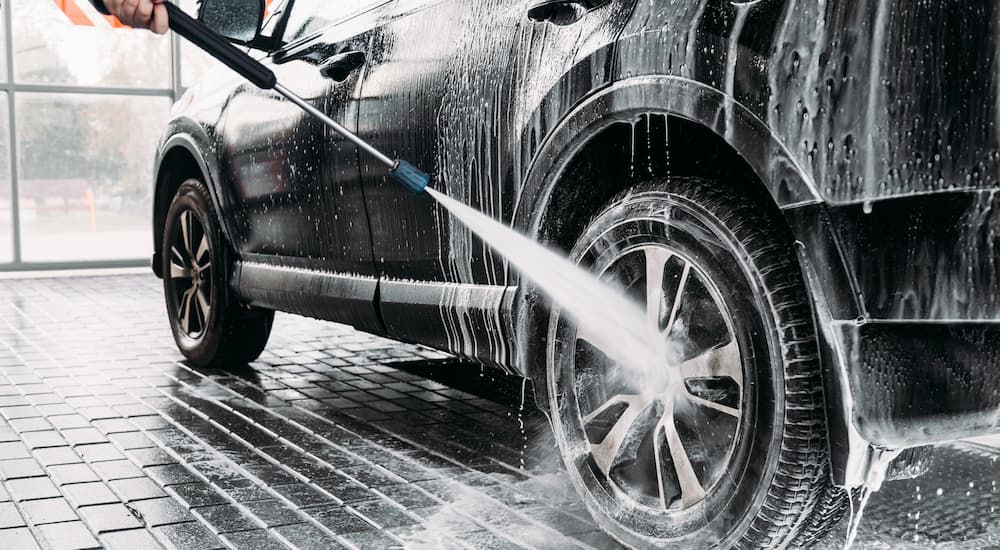
A vehicle is shown being cleaned at a car wash.

Keep Your Vehicle Clean

We promise we’re not just nagging now; it is important that you keep your vehicle clean in order to keep it on the road longer. Dirt and dust on your vehicle can hold moisture that can cause rust and corrosion to the body and frame, so frequent washings help you avoid this. Here in New Jersey, this is even more important in the winter when we all end up with plenty of salt, dirt, and ice on our vehicles for weeks at a time. Clean your vehicle every couple of weeks, and be sure to get the underside to remove salt buildup; this will help you avoid rust for as long as possible and protect the outside of your ride.

Inspect Your Vehicle Every Couple of Weeks

This is an easy thing to overlook, but getting into the habit of inspecting your vehicle on a routine basis can make a huge difference in its lifespan. Give yourself some time every couple of weeks to check your tires to make sure their tread looks good, and they have enough pressure, as well as your lights and windshield wipers. You can check your motor oil once a month just to be safe, and checking other fluids is also a good idea. You might even get in the habit of quickly inspecting your tires every time you approach your vehicle, making it easy to notice if one has lost some pressure or looks off.

Fix Minor Problems Before They Become Major Ones

Building on everything else we’ve said so far, one of the most important things you can do is fix problems as they come up. It can be very tempting when you find out your brakes are getting worn down to ignore that for as long as possible. This creates the very real possibility of a serious issue that damages your vehicle or even causes a collision. Small problems are easier and cheaper to fix than big ones; with cars, small issues today often become huge problems in the future, so deal with them as soon as possible.
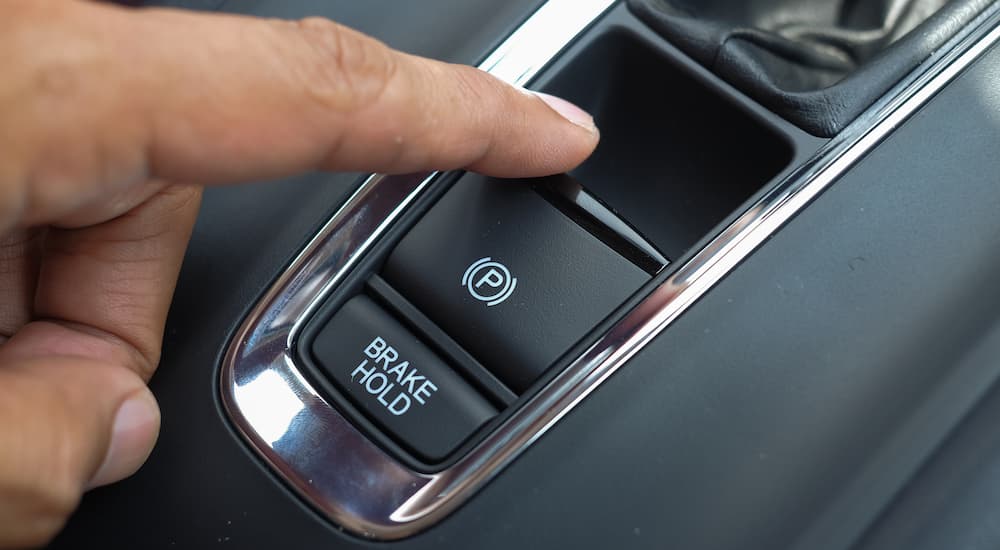
A close up of a hand using an electronic parking brake is shown.

Use Your Car’s Parking Brake

This might seem incredibly specific, but it’s important, and a lot of people don’t tend to think about it. When your car is in park, the transmission locks to keep it from rolling. On flat surfaces, this is okay, but on inclines, it can cause damage to your vehicle. Use your parking brake whenever you’re on an incline to protect your vehicle; it’s not a bad idea to use it every time you park your vehicle to build a habit and not have to worry about it.

Let Your Car Warm Up in the Winter

We cannot stress enough how important it is to let your vehicle warm up before you hit the road, particularly in the winter here in New Jersey. If you’re sitting in sunny California or Nevada and reading this, then you don’t need to worry about this nearly as much. That being said, after your car has sat overnight, a chilly January morning can still be hard on a vehicle, even in milder climates, so give your vehicle a chance to warm up.

But here in New Jersey, it is absolutely essential in winter. Start your vehicle and let it sit idle for at least several minutes so that your motor oil can warm up and properly coat all of the moving parts before you put any real strain on it. This will help extend the lifespan of your car and make it much more pleasant to drive since it’s not struggling. You wouldn’t want to be shoved out of bed on a cold, dark morning and immediately forced to run a mile, so let your car have a few minutes to drink some coffee, scroll through its preferred social media feed, and wake up a bit before you hit the road.

Find Service Professionals You Can Trust

Last but certainly not least, it always pays to find people you can trust to work on your vehicle and provide honest information whenever you have a problem. Here at Spirit Chrysler Dodge Jeep Ram, our certified service center is available to assist you with anything you need whenever a problem arises. Whether it is time for routine service, you need to put winter tires on your car, or a strange new sound has you worried, our expert technicians will take fantastic care of your vehicle. No matter where you choose to take your car, truck, or SUV, make sure they know what they’re doing and that they provide your vehicle with the care it deserves. This will keep your ride on the road longer, running smoothly, and ensure you get the most from it for many years to come.
Posted in:

Related Posts

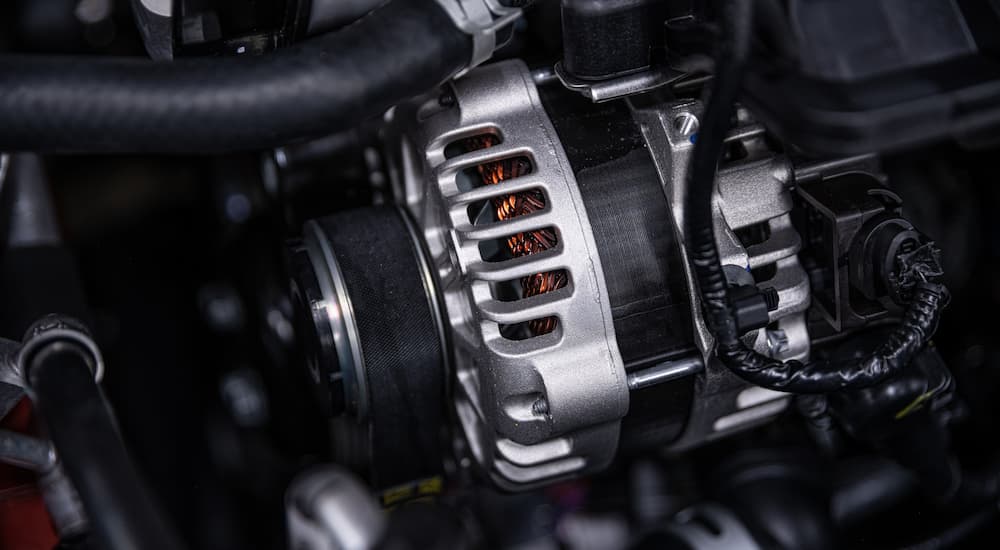
A close up of an alternator is shown getting car repair near you.

Is Your Car’s Alternator Dying? Let’s Find Out

It’s Thursday morning, and the weekend is so close you can practically taste it, but getting going when the sun’s barely up has become more difficult as the week drags on. So you’re running late, scrambling to make sure you have your phone, wallet, purse, keys, and whatever else you need to get out the door. You get into your car with no time to let it warm up, but you’ll worry about that later; you turn the key or push the button, and… nothing happens. You try again—still nothing. Your car won’t start, and now, officially, you’re having a bad day. At this point, it can be tempting to go back to bed or mumble, “ car repair near me,” at your phone in defeat, but instead, we suggest this: get active. This is the moment to push ahead and keep going forward, solving your problems and refusing to let the day get on top of you. To start, let’s see if we can figure out what has gone wrong with your vehicle because there are a few different things that are typical culprits when your car won’t start like that. One of the most common issues is a bad or failing alternator, so let’s learn about alternators and some ways to tell if yours is going bad or about to fail—that way, you can avoid a morning like the one we just described and keep it purely hypothetical. What Is an Alternator and How Does It Work? In order to tell if you have an issue with your vehicle’s alternator, it helps to understand exactly what it is and how it does its thing. Many people assume that the electrical systems in their vehicle—automatic windows, door locks, air conditioning, sound system, heated seats, etc—are all powered by the battery in their car. That’s what batteries do, but that’s not the case. Your car’s battery can deliver an impressive amount of power, but it’s designed to work briefly and then stop. What your battery does is pretty simple: it provides power to your vehicle’s starter, ignition coils, spark plugs, and other parts that get your engine started. Once your engine starts, your battery’s work is essentially done. From there on, the alternator does its thing and provides power to your vehicle. The alternator, by the way, looks like a small cylindrical generator and is typically attached to your engine or very close to it. As your engine runs, it sends power to your axles/wheels so you can move, but it also sends power to the alternator. It does this through a serpentine belt or drive belt, which connects a pulley on the engine’s crankshaft to a pulley on the alternator, transferring mechanical energy from the engine to the alternator. This turns a rotor shaft in the alternator, which spins magnets to create an electromagnetic generator, generating electricity in the form of alternating current (AC). A rectifier in the alternator then turns that into direct current (DC), which is used to charge your car’s battery and provide power to all of your vehicle’s electrical systems. In theory, all things being equal, the alternator should last throughout the lifespan of your vehicle because it’s designed to do a lot of work for a long time. As we all know, however, things aren’t equal when it comes to our vehicles, and it’s entirely possible for issues to arise with alternators. This can happen for a wide range of reasons, from overuse or overheating to damage from an external source or even exposure to too much water. So, how can you tell when a problem with your vehicle is due to the alternator? Well… Common Signs Your Alternator Is Failing For starters, a failing or faulty alternator will often manifest in a way tied to your car’s electrical system. Since it’s responsible for the electrical system functioning properly, issues typically come through that way. Still, figuring out where a problem lies can be tricky, so let’s look at some common things to watch for. A Warning Light on Your Dashboard The easiest way to tell you have a problem is when your vehicle tells you. You might have an “Alt” or “Gen” light on your dashboard, but many vehicles will illuminate the battery light even for an alternator problem. Diagnosing the specific issue from here can be tricky, but it’s a great place to start and narrows down your options. Dim or Flickering Lights One of the clearest signs of an alternator issue is if you notice your lights are dimmer than they should be or flicker between full and reduced brightness. This typically means your alternator isn’t delivering power properly—though it could be another issue with wiring or your electrical system. Similarly, if your lights are brighter than usual, this can mean your alternator's voltage regulator is failing. Malfunctioning or Slow Accessories/Features Since all of your accessories and car’s features are tied to the electrical system and rely on the alternator, issues with them can be a clear warning sign. If just one window is slow to go up and down, then it could simply be the motor on that window. However, if all of your windows are slow or your speakers aren’t working clearly, then they might not be getting enough power. A Dead Battery This is a tricky one because a dead battery typically makes us assume the problem is, spoiler alert, the battery. But that’s not always the case. If your alternator isn’t working properly, it won’t recharge your battery as it’s supposed to, and your battery could be working overtime to power your vehicle. Have your battery tested, or use a voltmeter to check your battery and find out if it’s the issue or if your alternator isn’t pulling its weight. Difficulty Starting Your Vehicle This warning sign ties into the previous one: if your vehicle isn’t starting easily, then it could be an issue with the battery—which might be caused by the alternator. Clicking sounds or slow cranking when you try to start your car often indicates a faulty battery, but the alternator could cause this. If your vehicle is stalling frequently in addition to having problems starting, then that likely means your alternator isn’t working properly, which is the bigger problem. Strange Noises—Growling or Whining Strange sounds are always a good warning sign to look for when it comes to a variety of car problems, and your alternator is no exception. If you hear whining or growling from your engine, this is often an indicator of an alternator in trouble. It usually means a belt isn’t set properly or the rotor shaft isn’t aligned correctly anymore—this could be a fairly simple fix, or you might need an all-new alternator. Strange Smells—Burning Rubber or Hot Wires There are a lot of potential smells to be mindful of when driving, which can indicate different issues with your vehicle. The smell of burning rubber often means you have a problem with the alternator, as does the scent of hot or burning wires. If you have ever been near an electrical fire, you probably know what this smells like. It’s an indicator that your alternator is overheating and starting to destroy itself; get it fixed or replaced immediately to prevent bigger issues or serious damage to your vehicle. What to Do Once You Find the Problem As you can see, there are quite a few warning signs when it comes to your car’s alternator that you should be aware of. Knowing to look for these things and what they mean can be the difference between noticing an issue before it becomes a major headache and finding yourself stuck in a very bad day. Always be mindful of strange sounds or smells coming from your vehicle—particularly the engine—and watch for things like dimming lights or slow electrical systems that can warn you about an issue before things stop working. Some alternator work is easy to do yourself if you have some experience, like replacing the serpentine belt, but other repairs are more complicated. Here at Spirit Chrysler Dodge Jeep Ram, our certified service center is always happy to help with anything you need and get you back on the road.